
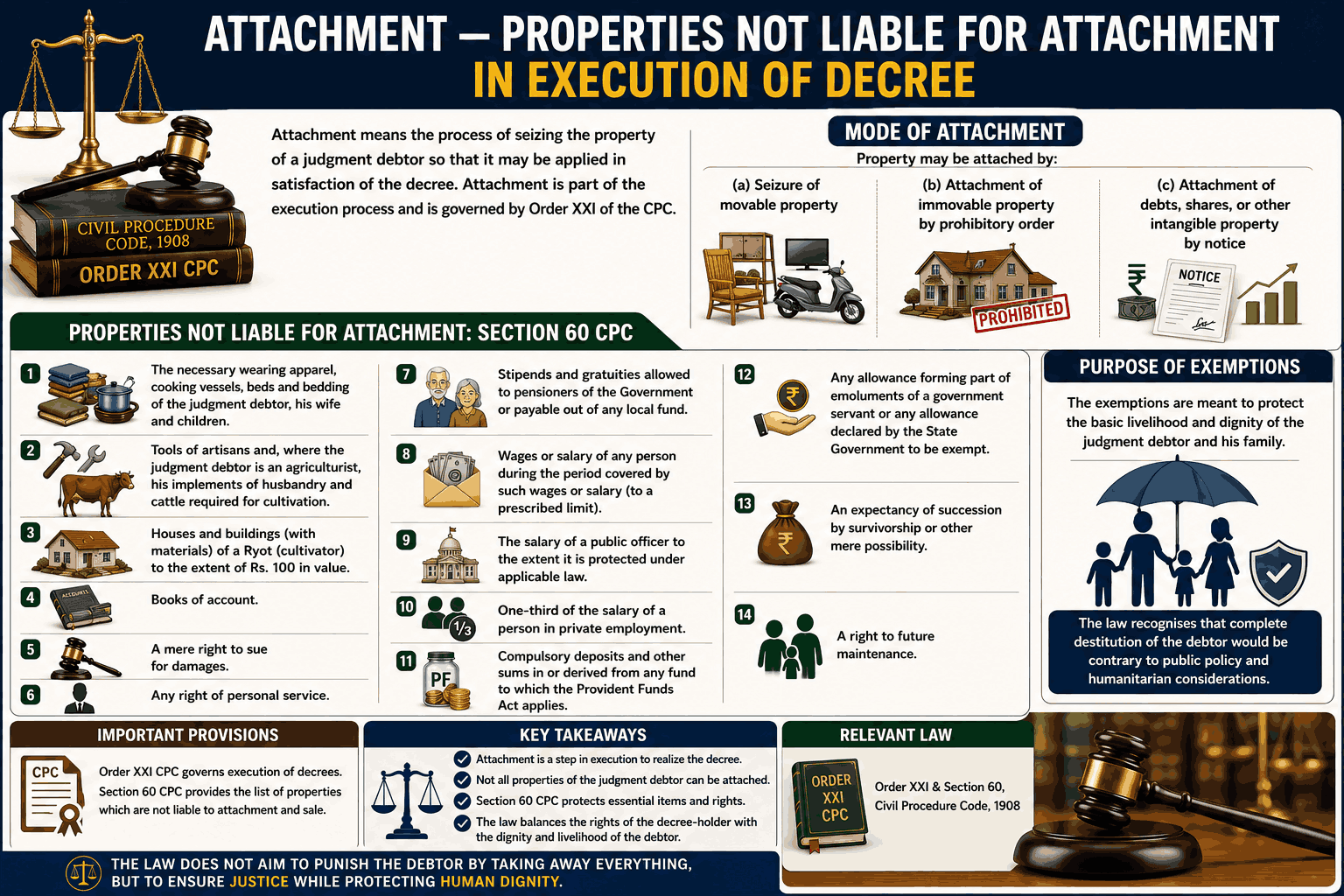
Attachment means the process of seizing the property of a judgment debtor so that it may be applied in satisfaction of the decree. Attachment is part of the execution process and is governed by Order XXI of the CPC.
Mode of Attachment
Property may be attached by:
(a) seizure of movable property,
(b) attachment of immovable property by prohibitory order,
(c) attachment of debts, shares, or other intangible property by notice.
Properties NOT Liable for Attachment: Section 60 CPC
The following categories of property are exempt from attachment and sale in execution of a decree:
- The necessary wearing apparel, cooking vessels, beds and bedding of the judgment debtor, his wife and children.
- Tools of artisans and, where the judgment debtor is an agriculturist, his implements of husbandry and cattle required for cultivation.
- Houses and buildings (with materials) of a Ryot (cultivator) to the extent of Rs. 100 in value.
- Books of account.
- A mere right to sue for damages.
- Any right of personal service.
- Stipends and gratuities allowed to pensioners of the Government or payable out of any local fund.
- Wages or salary of any person during the period covered by such wages or salary (to a prescribed limit).
- The salary of a public officer to the extent it is protected under applicable law.
- One-third of the salary of a person in private employment.
- Compulsory deposits and other sums in or derived from any fund to which the Provident Funds Act applies.
- Any allowance forming part of emoluments of a government servant or any allowance declared by the State Government to be exempt.
- An expectancy of succession by survivorship or other mere possibility.
- A right to future maintenance.
Purpose of Exemptions
The exemptions are meant to protect the basic livelihood and dignity of the judgment debtor and his family. The law recognises that complete destitution of the debtor would be contrary to public policy and humanitarian considerations.
Quick Summary
- Attachment is a process under Order XXI CPC used to seize a judgment debtor’s property for satisfying a decree.
- Property may be attached through seizure of movable property, attachment of immovable property, or notice regarding debts and shares.
- Section 60 CPC protects certain essential properties from attachment and sale during execution proceedings.
- Exempted properties include basic household items, tools of livelihood, salaries to a limited extent, provident funds, pensions, and rights to future maintenance.
- The purpose of these exemptions is to protect the dignity, livelihood, and humanitarian interests of the judgment debtor and their family.