

1. Introduction
One of the most enduring debates in jurisprudence concerns the relationship between law and morality. Many legal philosophers have questioned whether laws should always reflect moral principles or whether law should be understood independently of moral judgments. This debate gave rise to two influential schools of thought: Natural Law Theory and Legal Positivism.
Legal positivism emerged as a response to the natural law tradition. While natural law theorists argued that law must conform to moral principles, legal positivists maintained that the validity of law depends on social facts and legal authority rather than morality.
In simple terms, legal positivism views law as a system of rules created and recognized by legitimate political authority. These rules are binding not because they are morally correct but because they are enacted according to established legal procedures.
Legal positivism became particularly influential in modern legal systems because it provides a clear and structured way of identifying valid laws. By focusing on law as it is rather than law as it ought to be, positivist thinkers attempted to develop a more scientific and objective understanding of legal systems.
Understanding legal positivism is therefore essential for law students and scholars because it explains how modern legal systems operate and how legal rules derive their authority.
2. Meaning of Legal Positivism
Legal positivism is a theory of law that emphasizes the separation between law and morality. According to this approach, a rule can be legally valid even if it is morally questionable.
Legal positivism focuses on law as it exists, rather than how law should ideally be.
Several jurists have provided influential explanations of legal positivism.
a) John Austin :
John Austin, one of the earliest proponents of legal positivism, defined law as the command of a sovereign backed by sanctions. According to Austin, law consists of commands issued by a political superior that citizens habitually obey.
b) H.L.A. Hart:
H.L.A. Hart refined legal positivism by explaining that law is not merely a collection of commands but a system of rules governing behavior and institutional practices.
c) Hans Kelsen:
Hans Kelsen developed the Pure Theory of Law, which aimed to study law independently of morality, politics, and sociology. Kelsen viewed law as a hierarchy of norms deriving validity from a fundamental norm known as the Grundnorm.
Legal positivism therefore emphasizes that legal validity depends on the source of law rather than its moral content.
3. Historical Development of Legal Positivism
Legal positivism developed gradually as legal philosophers sought to understand law in a more systematic and scientific manner.
A] Early Positivism
Legal positivism began to emerge during the nineteenth century, particularly in response to natural law theory. Many scholars believed that natural law was too vague and subjective because it relied heavily on moral reasoning.
They argued that law should instead be studied as a social institution created by human authorities.
B] Analytical Positivism
The most important development during this period was analytical jurisprudence, which sought to analyze the structure of legal systems.
John Austin played a central role in this development by presenting a clear definition of law based on the concept of sovereign command.
C] Modern Positivism
In the twentieth century, legal positivism was further refined by scholars such as H.L.A. Hart and Hans Kelsen.
These thinkers moved beyond Austin’s command theory and developed more sophisticated explanations of how legal systems operate.
Their work helped shape the modern understanding of law as a structured system of rules and institutions.
4. John Austin’s Positivist Theory
John Austin (1790-1859) An English Jurists expounded the concept of analytical positivism, making law as a command of sovereign backed by sanction. He developed logically, a structure of legal system in which he gave no Place to values, morality, idealism and Justice.
“law is aggregate of rules set by men politically superior or sovereign to men as politically subject.”
John Austin
“A law is command which obliges a person or persons to a course of conduct.”
John Austin

He is often considered one of the founding figures of legal positivism. His theory, commonly known as the Command Theory of Law, defines law in terms of authority and obedience.
Law as, “A command of sovereign backed by sanction.”
Austin’s theory is based on three key ideas.
1. Command of the Sovereign
According to Austin, law is essentially a command issued by a sovereign authority. The sovereign is the person or body that is habitually obeyed by the majority of society.
2. Sanctions
Austin argued that legal commands are backed by sanctions, meaning punishments imposed for disobedience. Without sanctions, a command would merely be advice rather than law.
3. Habitual Obedience
Austin also emphasized that the authority of the sovereign depends on habitual obedience by the population. Citizens generally follow the commands of the sovereign because they recognize its authority.
Austin’s theory laid the foundation for analytical jurisprudence, although it was later criticized for oversimplifying the nature of legal systems.
5. H.L.A. Hart’s Modern Legal Positivism

H.L.A. Hart significantly advanced legal positivism by developing a more complex theory of law. In his influential book The Concept of Law, Hart argued that legal systems consist of both primary and secondary rules.
Key ideas of H. L. A. Hart are
- Primary Rules
- Secondary Rules
1. Primary Rules: Primary rules regulate human behavior by imposing duties and obligations.
For example, laws prohibiting theft or violence are primary rules because they govern individual conduct.
2. Secondary Rules: Secondary rules provide mechanisms for creating, modifying, and enforcing laws.
Hart identified three important types of secondary rules:
- Rule of recognition
- Rule of change
- Rule of adjudication
3. Rule of Recognition: The rule of recognition is particularly important because it provides a standard for identifying valid laws within a legal system.
For example, in many countries the constitution serves as a primary source for determining legal validity.
Hart’s theory explained how modern legal systems function as complex institutional structures rather than simple commands.
6. Hans Kelsen and Pure Theory of Law
Another major contribution to legal positivism came from Hans Kelsen, who developed the Pure Theory of Law. Kelsen attempted to create a scientific theory that analyzed law independently of moral, political, or social considerations.
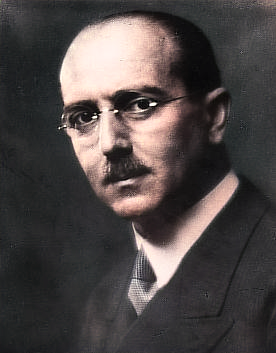
According to Kelsen, law is a hierarchical system of norms. Each legal rule derives its validity from a higher norm, forming a structured legal order.
At the top of this hierarchy lies the Grundnorm, or basic norm. The Grundnorm provides the ultimate source of validity for all other legal rules.
For example, in constitutional systems the constitution often functions as the foundational legal norm.
Kelsen’s theory emphasized the importance of legal structure and logical consistency in understanding legal systems.
7. Core Principles of Legal Positivism
Legal positivism is based on several fundamental principles.
- Separation of Law and Morality: Legal positivists argue that legal validity does not depend on moral approval. A law may be morally questionable but still legally valid if it is enacted according to recognized procedures.
- Law as a System of Rules: Legal systems consist of rules that regulate behavior and institutional processes.
- Legal Validity Based on Authority: A rule becomes law if it is created by a recognized legal authority such as a legislature or court.
- Legal Certainty: Legal positivism emphasizes clarity and predictability in legal systems. Clear rules allow individuals to understand their rights and obligations.
These principles help maintain stability and order within legal systems.
8. Criticism of Legal Positivism
Despite its influence, legal positivism has faced several criticisms.
Natural Law Criticism
Natural law theorists argue that law cannot be separated from morality. According to them, laws that violate fundamental moral principles lack legitimacy.
Sociological Criticism
Sociological jurists argue that legal positivism focuses too much on formal rules and ignores the social realities that influence legal behavior.
Dworkin’s Criticism
Ronald Dworkin criticized positivism by arguing that legal systems include principles and moral reasoning, not just rules. According to Dworkin, judges often rely on moral principles when deciding difficult cases.
These criticisms have led to more nuanced theories of law that combine elements of positivism with moral reasoning.
9. Legal Positivism in Modern Legal Systems
Legal positivism continues to influence modern legal systems.
Many legal institutions rely on rule-based governance, where laws derive authority from established procedures rather than moral evaluation.
Examples include:
- statutory interpretation
- constitutional interpretation
- administrative law
Legal positivism also contributes to legal certainty, ensuring that individuals and institutions can predict how laws will be applied.
10. Indian Perspective
The Indian legal system reflects several aspects of legal positivism.
The Constitution of India serves as the supreme legal authority. Laws derive their validity from constitutional provisions and legislative procedures.
Parliament and state legislatures enact laws through recognized constitutional processes, illustrating the positivist idea that legal validity depends on authority and procedure.
However, Indian courts also interpret laws in light of constitutional morality and fundamental rights, demonstrating that modern legal systems often combine positivist reasoning with broader principles of justice.
11. Conclusion
Legal positivism remains one of the most influential theories of law in modern jurisprudence. By emphasizing law as a system of rules created by legitimate authority, positivism provides a clear framework for understanding how legal systems function.
Although critics argue that law cannot be completely separated from morality, legal positivism plays a vital role in maintaining legal certainty, institutional order, and rule-based governance.
In practice, modern legal systems often balance positivist principles with considerations of justice and constitutional values. This combination allows law to remain both structured and responsive to societal needs.
Quick Revision Summary
- Legal positivism argues that law and morality are conceptually separate.
- Law is valid if it is created by recognized legal authority.
- John Austin developed the command theory of law.
- H.L.A. Hart explained law as a system of primary and secondary rules.
- Hans Kelsen’s Pure Theory of Law described law as a hierarchy of norms based on a basic norm (Grundnorm).
References
- John Austin, The Province of Jurisprudence Determined (1832).
- H.L.A. Hart, The Concept of Law (3rd ed., Oxford University Press).
- Hans Kelsen, Pure Theory of Law (Max Knight trans., University of California Press).
- R.W.M. Dias, Jurisprudence (5th ed., Butterworths).
- G.W. Paton, A Textbook of Jurisprudence (Oxford University Press).
- Ronald Dworkin, Law’s Empire (Harvard University Press).