1. Introduction
End-of-life decision-making has become one of the most sensitive areas where medicine, law, and ethics intersect. Advances in modern medical technology now allow doctors to sustain biological life for prolonged periods through artificial ventilation, feeding tubes, dialysis, and intensive care systems. While such technologies have saved countless lives, they also raise difficult questions when a patient suffers from irreversible neurological damage or terminal illness with no reasonable prospect of recovery. In such circumstances, families and doctors must confront the moral and legal dilemma of whether continuing life-sustaining treatment genuinely serves the dignity and interests of the patient.
- What is Euthanasia? Understanding the Concept, Types, and Global Legal Debate
- The Legal Journey of Euthanasia in India: From Aruna Shanbaug to the Right to Die with Dignity, The Legal Evolution of Euthanasia in India
- Vegetative State, Living Wills, and Medical Ethics: When Does Life-Sustaining Treatment Become Futile?
In India, debates surrounding euthanasia gained prominence through judicial intervention rather than legislative reform. Over time, the Supreme Court of India gradually developed a constitutional framework governing passive euthanasia and end-of-life care. Landmark decisions such as Aruna Ramachandra Shanbaug v. Union of India (2011) and Common Cause v. Union of India (2018) recognised that the right to life under Article 21 of the Constitution includes the right to die with dignity under specific circumstances.
Harish Rana case represents an important development in this evolving legal landscape. Unlike earlier judgments that primarily established legal principles, the Harish Rana case demonstrates the practical application of passive euthanasia guidelines in a real medical setting. The case illustrates how constitutional doctrines regarding patient dignity, autonomy, and compassionate end-of-life care are now being translated into concrete legal decisions. It marks a new phase in Indian euthanasia jurisprudence where passive euthanasia is no longer merely theoretical but operational within the legal system.
2.Passive Euthanasia in Indian Law
The legal evolution of euthanasia in India has occurred primarily through judicial interpretation of constitutional principles rather than comprehensive statutory legislation. Three landmark Supreme Court judgments have shaped this development.
The first major decision was Gian Kaur v. State of Punjab (1996) 2 SCC 648. In this case, the Supreme Court considered whether the right to life under Article 21 includes a right to die. The Court rejected the argument that suicide could be considered a fundamental right and upheld the constitutional validity of Section 306 of the Indian Penal Code, which criminalizes abetment of suicide. However, the Court made an important observation that the concept of “dying with dignity” in cases of terminal illness could differ from suicide. This remark later became the foundation for subsequent legal developments.
The debate re-emerged in Aruna Ramachandra Shanbaug v. Union of India (2011) 4 SCC 454. Aruna Shanbaug, a nurse who had been assaulted in 1973, remained in a persistent vegetative state for decades. A petition was filed before the Supreme Court seeking permission to withdraw life-sustaining treatment. The Court refused the request in her particular case but recognised passive euthanasia under strict judicial supervision. It distinguished between active euthanasia, which involves intentionally causing death, and passive euthanasia, which involves withdrawing life-sustaining treatment. Since Parliament had not enacted a specific law on euthanasia, the Court issued interim guidelines requiring approval from High Courts and medical boards.
A major constitutional breakthrough occurred in Common Cause v. Union of India (2018) 5 SCC 1. A Constitution Bench of the Supreme Court recognised that the right to life under Article 21 includes the right to die with dignity. The Court also legally recognised Advance Medical Directives (living wills), allowing individuals to refuse life-sustaining treatment in advance if they become terminally ill or incapable of expressing their wishes.
Together, these judgments created the legal framework governing passive euthanasia in India. The Harish Rana case demonstrates how these principles are now applied in real situations.
3. Facts of the Harish Rana Case
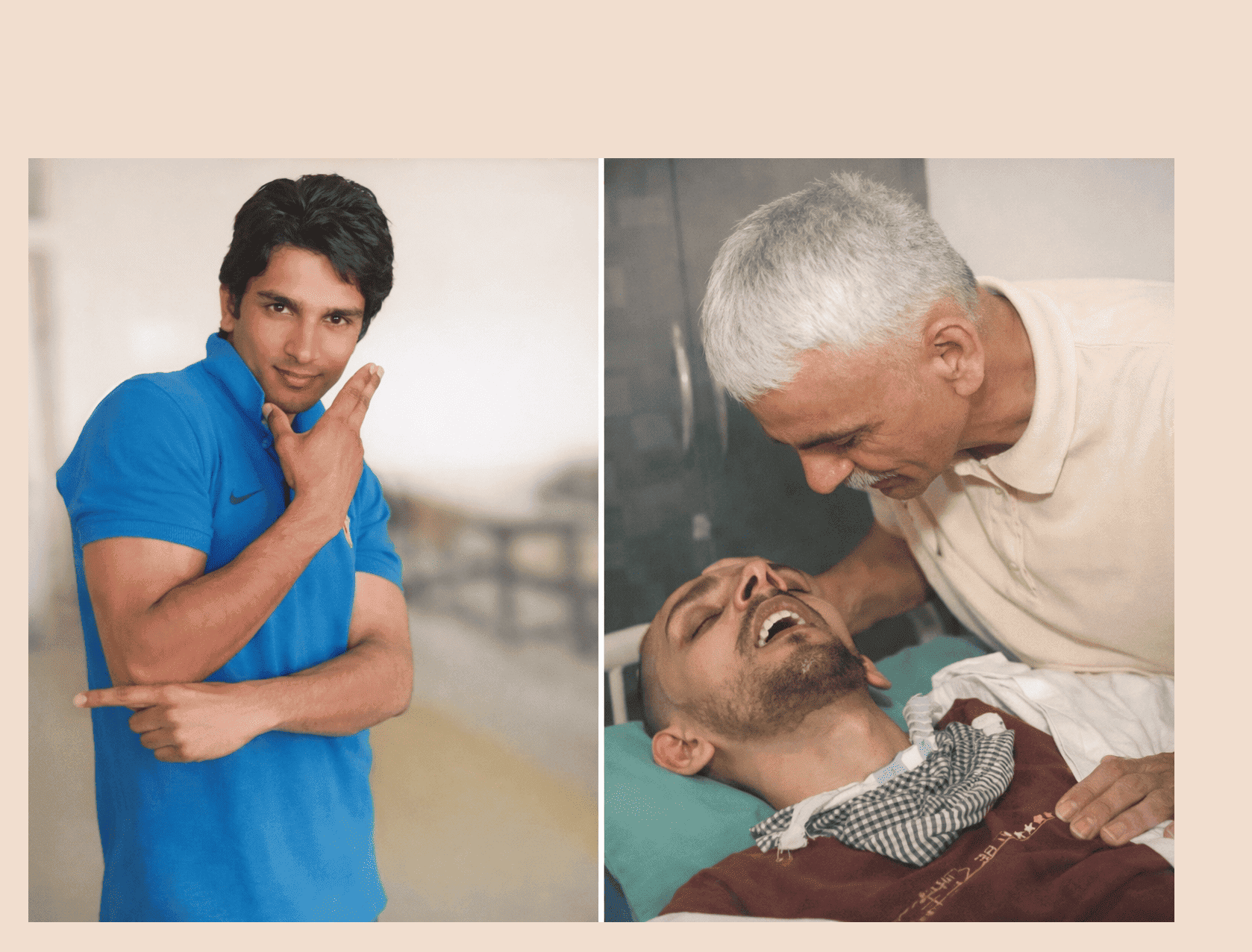
The Harish Rana case emerged from a tragic medical situation involving a patient suffering from severe neurological damage and prolonged unconsciousness. Harish Rana had reportedly remained in a critical medical condition for an extended period, dependent on life-support systems that maintained biological functioning but offered little prospect of meaningful recovery.
Family members of the patient approached the court seeking permission to withdraw certain forms of life-sustaining treatment. They argued that continued medical intervention merely prolonged suffering without any realistic chance of restoring consciousness or improving the patient’s quality of life.
The case involved multiple stakeholders, including hospital authorities, independent medical experts, and the judiciary. Medical boards were constituted to examine the patient’s neurological condition and prognosis. These boards evaluated clinical evidence, neurological reports, and diagnostic findings to determine whether the patient’s condition was irreversible.
Because decisions involving withdrawal of life-sustaining treatment carry profound ethical and legal implications, judicial oversight became necessary. The courts were required to ensure that any decision complied with the procedural safeguards established by the Supreme Court in earlier euthanasia judgments.
4. Medical Condition and Clinical Assessment
In cases involving passive euthanasia, courts rely heavily on expert medical evaluation. The Harish Rana case required detailed neurological assessment to determine whether the patient suffered from conditions such as persistent vegetative state (PVS) or another irreversible neurological disorder.
Persistent vegetative state occurs when the brain’s higher cognitive functions are permanently damaged, leaving the patient without awareness or meaningful interaction with the environment. Patients may retain basic reflexes and sleep-wake cycles but lack consciousness and voluntary response.
Medical boards typically assess several factors in such cases, including:
- Brain imaging results
- Neurological reflexes
- Response to external stimuli
- Duration of unconsciousness
- Likelihood of neurological recovery
In many jurisdictions, prolonged vegetative states with no signs of improvement significantly reduce the possibility of meaningful recovery. Courts rely on these medical findings to determine whether continued treatment serves any therapeutic purpose.
The reliance on expert medical opinion ensures that decisions regarding withdrawal of life support are based on scientific evidence rather than emotional or speculative considerations.
5. Legal Process and Judicial Procedure
The Harish Rana case followed procedural safeguards established by the Supreme Court in earlier euthanasia judgments. These safeguards were designed to prevent misuse and ensure that end-of-life decisions are made cautiously.
First, the court examined medical reports prepared by independent medical boards. These boards provided objective clinical assessments regarding the patient’s condition and prognosis.
Second, the court evaluated whether the patient had previously expressed any wishes regarding life-sustaining treatment. In cases where a living will or advance directive exists, courts must respect the patient’s autonomous decision.
Third, statements of family members were considered to determine whether they genuinely believed that withdrawing treatment would respect the patient’s dignity rather than serve other interests.
Finally, the court ensured that all procedures complied with the safeguards established in Common Cause v. Union of India (2018).
These procedural steps demonstrate how the judiciary attempts to balance compassion with caution in end-of-life cases.
6. Supreme Court Reasoning
The court’s reasoning in the Harish Rana case reflects the constitutional principles articulated in earlier judgments.
First, the court reaffirmed that Article 21 protects not merely biological existence but life with dignity. When medical treatment merely prolongs the dying process without improving the patient’s condition, continuing such treatment may conflict with the principle of dignity.
Second, the court emphasized patient autonomy. Even when patients cannot express their wishes, previously expressed preferences or advance directives must be respected.
Third, the court balanced these considerations against the sanctity of life principle. The judiciary remains cautious in allowing withdrawal of treatment, ensuring that decisions are supported by medical evidence and procedural safeguards.
Through this reasoning, the court reaffirmed that passive euthanasia represents a compassionate response to irreversible medical suffering rather than a denial of the value of life.
7. Withdrawal of CANH (Clinically Assisted Nutrition and Hydration)
One of the most debated aspects of end-of-life care involves Clinically Assisted Nutrition and Hydration (CANH). CANH refers to the provision of food and fluids through medical devices such as feeding tubes when patients cannot eat or drink independently.
The withdrawal of CANH has significant ethical implications because food and water are traditionally viewed as basic human necessities rather than medical treatment. However, when provided through medical devices, they become part of clinical intervention.
Courts and medical professionals generally classify the withdrawal of CANH as passive euthanasia, not active euthanasia. The intention is not to cause death but to discontinue medical treatment that artificially prolongs life without meaningful benefit.
The distinction between allowing natural death and intentionally causing death remains central to legal and ethical analysis.
8. Significance of the Harish Rana Case
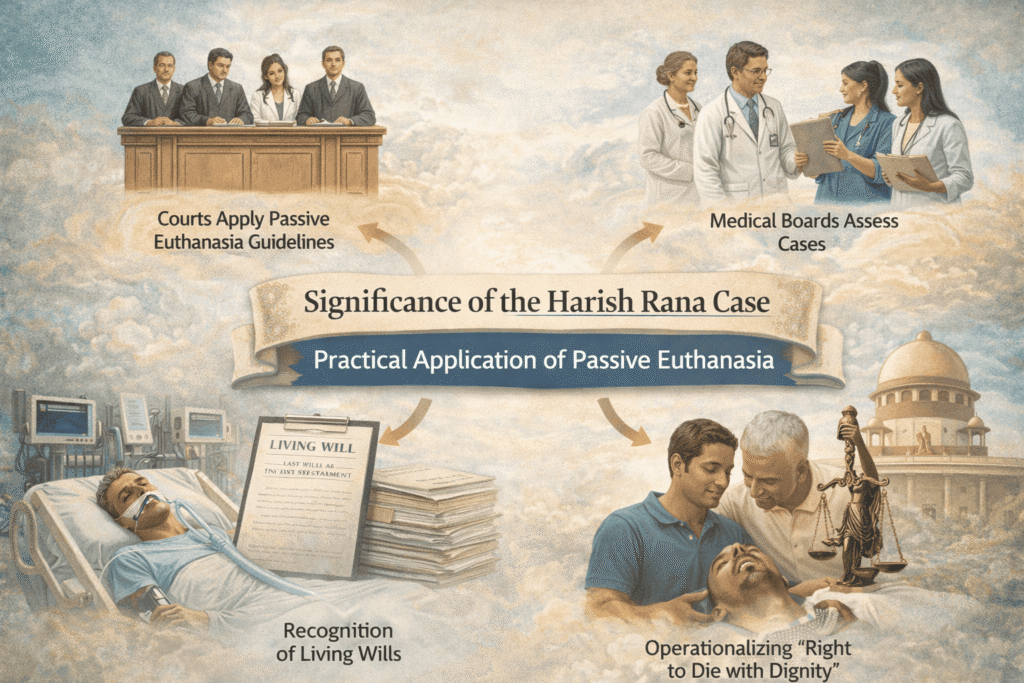
The Harish Rana case marks an important stage in the development of euthanasia law in India.
Earlier judicial decisions primarily established theoretical legal principles governing passive euthanasia. However, the Harish Rana case demonstrates the practical application of those principles in real clinical situations.
The case highlights several developments:
- Passive euthanasia guidelines are now operational in courts.
- Medical boards play a crucial role in decision-making.
- Courts are increasingly willing to recognise patient dignity in end-of-life cases.
This shift indicates that passive euthanasia has become a functional part of Indian medical jurisprudence.
9. Ethical and Policy Implications
The Harish Rana case raises broader ethical and policy questions.
First, hospitals must develop clear institutional protocols for end-of-life care. Doctors require guidance on when life-sustaining treatment may be withdrawn.
Second, public awareness about living wills and advance directives remains limited in India. Greater awareness would allow individuals to express their preferences regarding end-of-life treatment.
Third, safeguards remain necessary to prevent potential misuse. Vulnerable patients must be protected from coercion or economic pressure.
Finally, judicial oversight continues to play a crucial role in ensuring transparency and accountability.
10. Conclusion
The Harish Rana case illustrates how India’s evolving euthanasia jurisprudence is gradually moving from constitutional theory to practical implementation. By applying the principles established in Common Cause v. Union of India, the judiciary has demonstrated that passive euthanasia can be administered within a structured legal framework.
The case confirms that the right to die with dignity recognised under Article 21 is no longer merely theoretical but operational within Indian law.
As medical technology continues to prolong life, courts and policymakers will increasingly confront difficult questions about dignity, autonomy, and compassionate end-of-life care.
The next article in this series will examine global legal models of euthanasia and physician-assisted dying, exploring how different countries regulate end-of-life decisions.
Quick Summary
- The Harish Rana case represents a practical application of passive euthanasia principles in India.
- Indian euthanasia law evolved through Gian Kaur (1996), Aruna Shanbaug (2011), and Common Cause (2018).
- Courts rely heavily on medical board evaluations when deciding end-of-life cases.
- Withdrawal of CANH is considered passive euthanasia rather than active euthanasia.
- The case confirms that the right to die with dignity under Article 21 is now operational in Indian law.
Life, Law and Dignity : Understanding Euthansia Series
The next article in this series would find as below:
- What is Euthanasia? Understanding the Concept, Types, and Global Legal Debate
- The Legal Journey of Euthanasia in India: From Aruna Shanbaug to the Right to Die with Dignity, The Legal Evolution of Euthanasia in India
- Vegetative State, Living Wills, and Medical Ethics: When Does Life-Sustaining Treatment Become Futile?
- The Harish Rana Case and Passive Euthanasia in India: A New Chapter in End-of-Life Law
- The Future of End-of-Life Law in India: Should Parliament Enact a Comprehensive Euthanasia Law?
References
- India Const. art. 21 (Right to Life and Personal Liberty).
- The Transplantation of Human Organs and Tissues Act, 1994, No. 42 of 1994 (India).
- Indian Penal Code, 1860, §§ 306, 309.
- Gian Kaur v. State of Punjab, (1996) 2 S.C.C. 648 (India).
- Aruna Ramachandra Shanbaug v. Union of India, (2011) 4 S.C.C. 454 (India).
- Common Cause v. Union of India, (2018) 5 S.C.C. 1 (India).
- Harish Rana Case, reported in recent judicial proceedings applying Common Cause guidelines on withdrawal of life-sustaining treatment.
- Tom L. Beauchamp & James F. Childress, Principles of Biomedical Ethics (7th ed. 2013).
- Margaret Pabst Battin, Ending Life: Ethics and the Way We Die (2005).
- Helga Kuhse & Peter Singer, Bioethics: An Anthology (2d ed. 2006).
- Robert M. Veatch, The Basics of Bioethics (3d ed. 2012).
- World Health Organization, Ethics and Health: End-of-Life Care (2017).
- American Medical Association, Code of Medical Ethics: End-of-Life Care and Life-Sustaining Treatment.
- Jonathan Herring, Medical Law and Ethics (9th ed. 2021).
- Emily Jackson, Medical Law: Text, Cases, and Materials (5th ed. 2019).
- Indian Kanoon, https://indiankanoon.org.
- SCC Online, Supreme Court Cases database.